
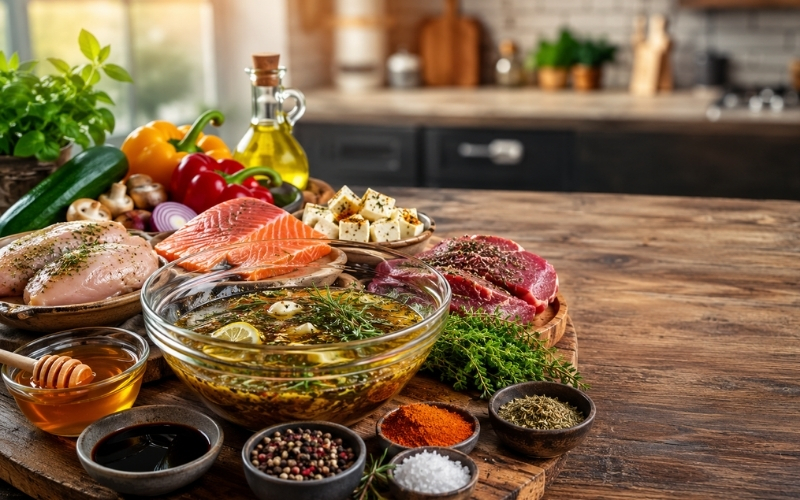
Marination is one of the simplest and most effective ways to improve the taste, texture, and juiciness of food. Whether you are preparing chicken, fish, paneer, vegetables, or red meat, the right marinade can enhance natural flavors while creating a delicious outer crust during cooking.
Many people believe that marination only adds flavor, but it also plays an important role in tenderizing food, retaining moisture, and improving the overall cooking experience. In this guide, we’ll explore the science behind marination, its benefits, essential ingredients, and expert tips to help you achieve restaurant-quality results at home.
What is Marination?
Marination is the process of soaking food in a seasoned liquid mixture before cooking. The mixture, known as a marinade, contains ingredients that improve flavor, texture, and moisture.
Depending on the type of food, marination can last anywhere from 30 minutes to 24 hours. Delicate foods like fish require less time, while tougher cuts of meat benefit from longer marination.
The main goal of marination is to:
- Add rich flavor
- Tenderize proteins
- Retain moisture during cooking
- Improve browning and caramelization
- Create a more enjoyable eating experience
Essential Ingredients of a Marinade
A balanced marinade contains several key components that work together.
1. Liquid Base
The liquid helps carry flavors throughout the surface of the food.
Common options include:
- Water
- Lemon or orange juice
- Vinegar
- Soy sauce
- Buttermilk
- Yogurt
- Coconut milk
- Wine
Each liquid provides a different flavor profile while helping ingredients blend together.
2. Salt
Salt is one of the most important ingredients in any marinade.
It helps:
- Enhance flavor
- Improve moisture retention
- Season food more evenly
- Prevent meat from drying during cooking
Soy sauce, Worcestershire sauce, and sea salt are commonly used sources.
3. Acid
Acids help break down proteins on the surface, making food more tender.
Popular acidic ingredients include:
- Lemon juice
- Lime juice
- Vinegar
- Yogurt
- Buttermilk
- Tomato juice
Too much acid or excessive marination can make delicate proteins mushy, so timing is important.
4. Oil or Fat
Oil helps coat the food evenly and carries fat-soluble flavors from herbs and spices.
Common choices include:
- Olive oil
- Vegetable oil
- Sesame oil
- Mustard oil
Oil also promotes better browning during grilling or roasting.
5. Sweeteners
Sugar helps balance acidity and enhances caramelization during cooking.
Examples include:
- Honey
- Brown sugar
- Maple syrup
- Jaggery
- White sugar
These ingredients create a beautiful golden color and slightly crispy exterior.
6. Herbs and Spices
This is where the flavor truly comes alive.
Popular choices include:
- Garlic
- Ginger
- Rosemary
- Thyme
- Oregano
- Black pepper
- Paprika
- Turmeric
- Cumin
- Coriander
- Chili flakes
Different combinations create unique regional and international flavors.
You Can Also Read : How to Become a Child Actor in India: A Step-by-Step Guide
How Does Marination Work?
Marination works through a combination of chemical and physical processes.
Salt Penetrates the Food
Salt moves into the food through osmosis, helping retain moisture and improving seasoning.
Acids Tenderize
Acidic ingredients gently soften proteins on the outer layer of meat and vegetables.
Oils Carry Flavor
Oil helps herbs and spices stick to the food while improving cooking performance.
Heat Completes the Process
Most of the delicious aroma develops during cooking when sugars caramelize and spices release their essential oils.
Benefits of Marination
Enhances Flavor
Marinades coat food with herbs, spices, and seasonings that create richer and more complex flavors.
Makes Food More Tender
Ingredients like yogurt, buttermilk, vinegar, and citrus juices help soften tougher cuts of meat.
Retains Moisture
Salt allows meat to hold onto more moisture, producing juicy and tender results after cooking.
Improves Texture
Marinated foods often develop a crisp, flavorful crust while remaining soft and juicy inside.
Promotes Better Browning
Sugar and oil help create an attractive golden-brown finish during grilling, roasting, or pan-frying.
You Can Also Read : What Is a Mock Drill and Why Is It Important?
Recommended Marination Times
| Food | Recommended Time |
|---|---|
| Fish | 15–30 minutes |
| Shrimp | 15–30 minutes |
| Paneer | 30 minutes–2 hours |
| Vegetables | 30 minutes–1 hour |
| Chicken | 2–12 hours |
| Lamb | 4–24 hours |
| Beef | 6–24 hours |
Avoid over-marinating delicate foods, as they can become overly soft.
Common Marination Mistakes
Using Too Much Acid
Excess acid can break down proteins too much, resulting in a mushy texture.
Marinating Too Long
Long marination isn’t always better. Different foods require different timings.
Forgetting Salt
Without salt, the marinade won’t effectively season the food.
Reusing Marinade
Never reuse raw marinade without boiling it first, as it may contain harmful bacteria.
Marinating at Room Temperature
Always marinate food in the refrigerator to maintain food safety.
Tips for Perfect Marination
- Use fresh herbs and spices whenever possible.
- Cover food completely with the marinade.
- Marinate in glass, stainless steel, or food-safe plastic containers.
- Turn the food occasionally for even coating.
- Pat the surface dry before grilling to achieve better browning.
- Reserve a separate portion of the marinade for serving as a sauce if needed.
You Can Also Read : What Is a Mock Drill and Why Is It Important?
Is Marination Always Necessary?
Not every recipe requires long marination. Tender cuts of meat, seafood, and fresh vegetables often need only a light coating of seasoning before cooking.
However, for grilled meats, barbecue recipes, roasted chicken, kebabs, tandoori dishes, and flavorful vegetables, marination significantly improves taste and texture.
Final Thoughts
Marination is both an art and a science. A well-balanced marinade enhances flavor, improves tenderness, and keeps food juicy while creating an irresistible aroma during cooking. By understanding how ingredients like salt, acids, oils, herbs, and spices work together, you can prepare meals that are richer in flavor and more enjoyable to eat.
Whether you’re cooking at home or experimenting with new recipes, mastering the art of marination can elevate everyday dishes into restaurant-quality meals.
Have your own marination tips, recipes, or cooking techniques? Share your insights through our Write For Us Food section and inspire fellow food lovers with your culinary expertise.